
No, not the type that come out of the frying pan and may or may not be crispy, but the type that your cooker nowadays needs to get the frying pan to work and are themselves getting crisp-thinner and mightier by the day.
Microelectronics – they are literally everywhere. And if I – with my background in linguistics and communication – can see that clearly now, and appreciate, it is because of the massive, visible transformation the world of things has been going through over the past 30 or so years. In other words: what do a washing machine, a weather station, an Antarctic research laboratory and a ship navigating through polar waters have in common? The answer is quite simple: they all depend on microchips.
In November 2026 the Bulgarian Antarctic Expedition will set out for the 35th time to do even more research on and around Livingston Island, home to the “St. Kliment Ohridsky” National Research Base. The first Bulgarian Antarctic Expedition was organised in 1987/88 summer and Prof. Christo Pimpirev was a huge part of it. Ask Bulgaria’s most prominent science persona about his most cherished memories of life on the base and, as he has shared in many of his books, he will talk emotionally and at length about what he calls the “romantic” first decades of creating the current small Bulgarian settlement from scratch. Back then researchers would barely make a single, very brief call home once a month over radio waves. Work – and entertainment – was mostly analogue, manual and greatly isolated from the rest of the world.
It’s very different on the Bulgarian Antarctic Base nowadays. Instead of the single container-turned-living-and-working-quarters for the first polar researchers, the complex now spans several buildings, including the brand-new laboratory complex which just hosted its first scientists during the 2025-26 season. There is state-of-the art equipment in the lab, 24/7 internet access, steady provision of electricity and water, most modern amenities are there for expedition members. I asked one of the base electricians, engineer Krassimir Krastev and was not really surprised to hear that all daily routine tasks nowadays are inevitably reliant on microelectronics. From the main electrical panel in the control room, through to the everyday appliances such as washing machines and driers in the dormitories, the fridges in the dining area, the controls of the incinerator which enables safe disposal of garbage, all the way to the diesel generators and the power invertors of the photovoltaic system supplying for the electricity of the base. You’ve brought your microelectronics with you on the expedition in your phone, laptop, and earbuds, even in your electric toothbrush! There are chips in the weather stations and the radio stations, in the Starlink equipment and surveillance cameras researchers use to track data. Microelectronics are part of multiple devices in the doctor’s surgery on the base, monitoring across vital indicators from your blood pressure to your blood sugar, and their precision is crucial for the health and wellbeing of every member of the expedition.
A chip is essentially a tiny piece of electronics that allows a device to sense, calculate, remember, communicate or control something.
Almost EVERYTHING on the base nowadays has chips in it. This was the immediate response of base engineer with a PhD in electronics, Dr. Petar Sapundjiev. Obviously, the computing power of laptops, microscopes and all sorts of lab equipment run on chips, but here are a few examples that are way out of the ordinary and certainly let the imagination run wild:
The glacier camera lens on live webcams monitoring glaciers, much like the lens of the phones we now take fabulous photos with, contains image-sensor chips. Now try to imagine its size, compare that to the magnitude of the object to be filmed, and the distance from which the shot will be taken, and you may understand the awe which this miniscule marvel of technology evokes with those who have been tracing – and driving – its development over the recent 20 years. Groundbreaking Bulgarian research projects in Antarctica involve data from such webcams.
The seismological station mounted on the island by geophysicist Dr. Gergana Dimitrova detects tiny vibrations in the ground. An ADC chip converts those physical signals into digital information that a computer can analyse.
Then there is the autonomous communication system which provides access to images from the Antarctic Base even during the winter when it is closed. It can do that thanks to the RTC (Real Time Clock) chips, among many others. Which in effect is a digital clock that keeps accurate time despite temperature fluctuations. It is unbelievable to imagine how all of these complex tasks are fulfilled by a minute chip, and that is what keeps the entire systems timing together!
And if you really want to be super-awed by the application of microelectronics, all you need to do is peep into The Bridge of the St. Cyril and Methodius Research Ship (RSV 421) - the command centre used for navigation, steering, and overall movement of the ship. Or go to the Engine Control Room to see how engineers monitor various performance indicators of the machinery. Or check out the sophisticated onboard satellite systems laboratory EnduroSat installed on Bulgaria's naval research vessel and polar transport vessel.
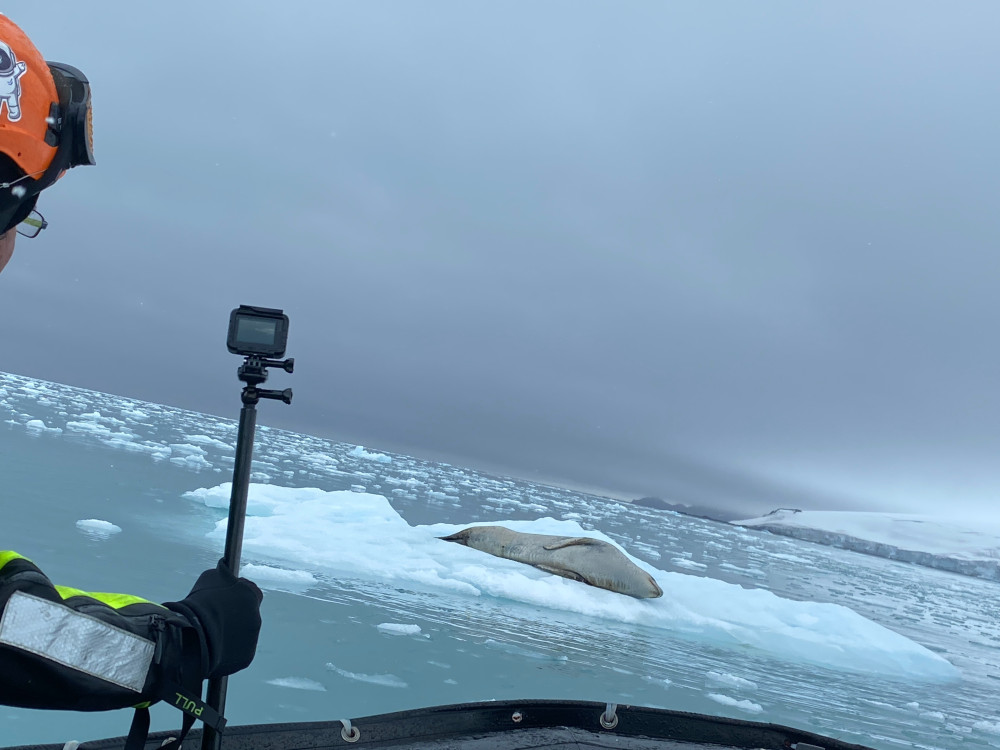
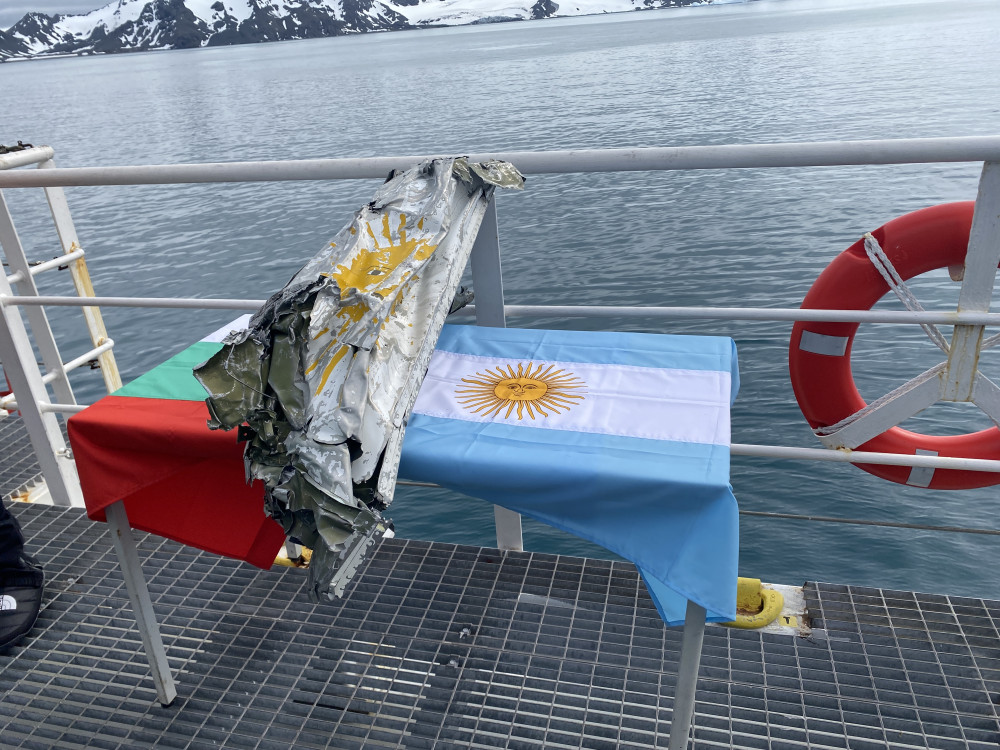
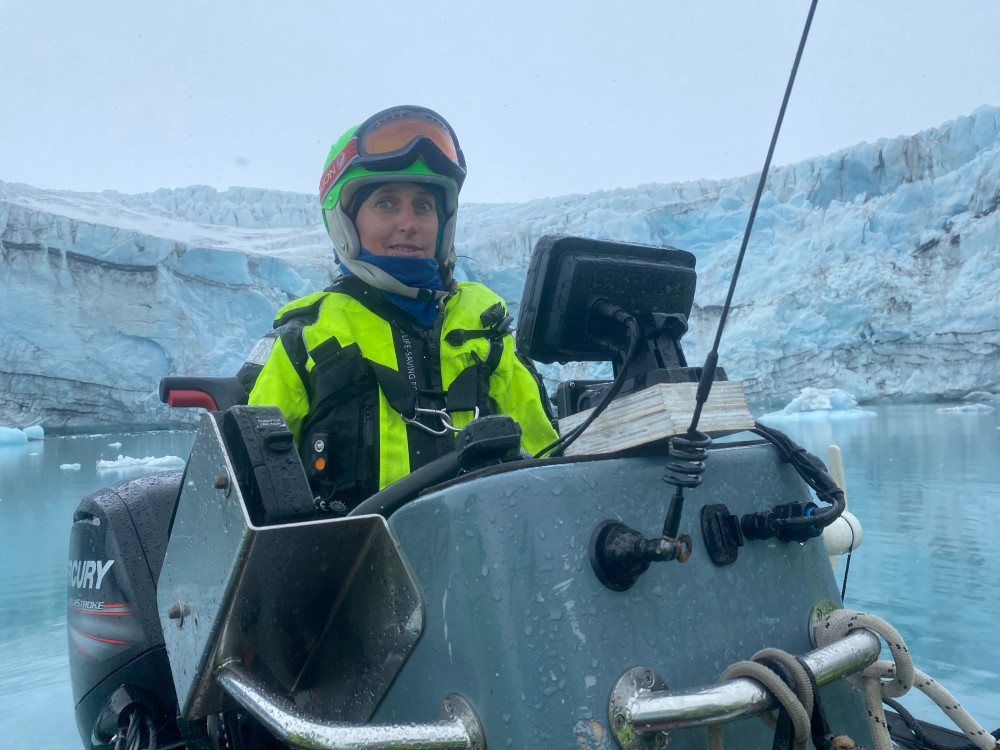
In 2025 and ’26 Bulgarian polar researchers in Antarctica discovered and recovered debris from an Argentinian navy aircraft that crashed on Livingston Island in 1976. Defence Minister Petri went on record to say "Argentina is indebted to you […]" as the discovery brought closure to the families of the crew and scientists who lost their lives in the crash in this decades-old aviation tragedy. The Bulgarian researchers stumbled upon the debris which shed new light on the 1976 plane crash while they were cruising to attempt to collect geological samples on board the Zodiac boat. Like virtually all modern electrical motorboats, the Zodiac too contains microelectronics. As do navigation devices, sonars and many other systems on board.
Back on land, here’s the fascinating simplicity of how science works. No, the photovoltaic panels installed recently on the base don’t have chips themselves, civil engineer Vesselin Stamenov of Simsta Engineering explains, but microelectronics run every bit of their automation and controls. They’re the ones which make sure that the panels work properly, which is quite a tall call as the entire supply of electricity for the lab as well as the water heating system are managed by electronics. And the make it even wilder, this means you can remotely regulate the temperature over wifi.
While we’re all used to the smart house notion by now, and this seems just too much of a “been there, done that” stuff, consider this: the Bulgarian Antarctic Base is approximately 13,800 kilometers away from mainland Bulgaria, and inhabited just over 3 months a year. But controls of systems on the base and data from it is accessible to the crew and researchers year-round. Thanks to the advancement in microelectronics, they can now remotely watch what’s going on literally on the other end of the world and grow our knowledge of how it works even in the absence of the expedition.
Now here’s the big question – why on Earth (pun intended) are we talking about chips in Antarctica, when they can do amazing things anywhere in the world? Let me give you my personal randomised list why this is important.
To begin with, Antarctica is the Earth’s largest outdoor laboratory and because no exploitation of natural resources is permitted there, researchers are focussed on investigating the continent’s rich bedrock. Modern electronics depend on a complex supply of critical minerals and other raw materials. Some are essential to semiconductors themselves; others are needed elsewhere in the devices and systems around them. And humanity must make sure that we do not completely exhaust the Earth’s mineral depository to put our modern lifestyle and research devices at risk.
Then, there are the people who will build what comes next. Antarctica is a place that truly inspires people to do science and best demonstrates the multidisciplinary teams that research needs. Realising how much creativity has gone into designing these miniature samples of human ingenuity and their multiple applications across all aspects of polar research may well motivate the next generation of engineers research – and the world – so direly needs.
And finally, I confess my personal (not so healthy) passion for the edible type of chips but I am genuinely infatuated with the advancement of these tiny machines and their role as catalyst for both ecological and human wellness.
Picture 1
Picture 2
Picture 3